Consumer electronics & connected products
Wearables, audio, smart-home devices, companion apps, and useful everyday experiences.
We develop integrated hardware and software, then verify the design against performance, reliability, usability, and manufacturing requirements.
Explore engineering capabilities ↘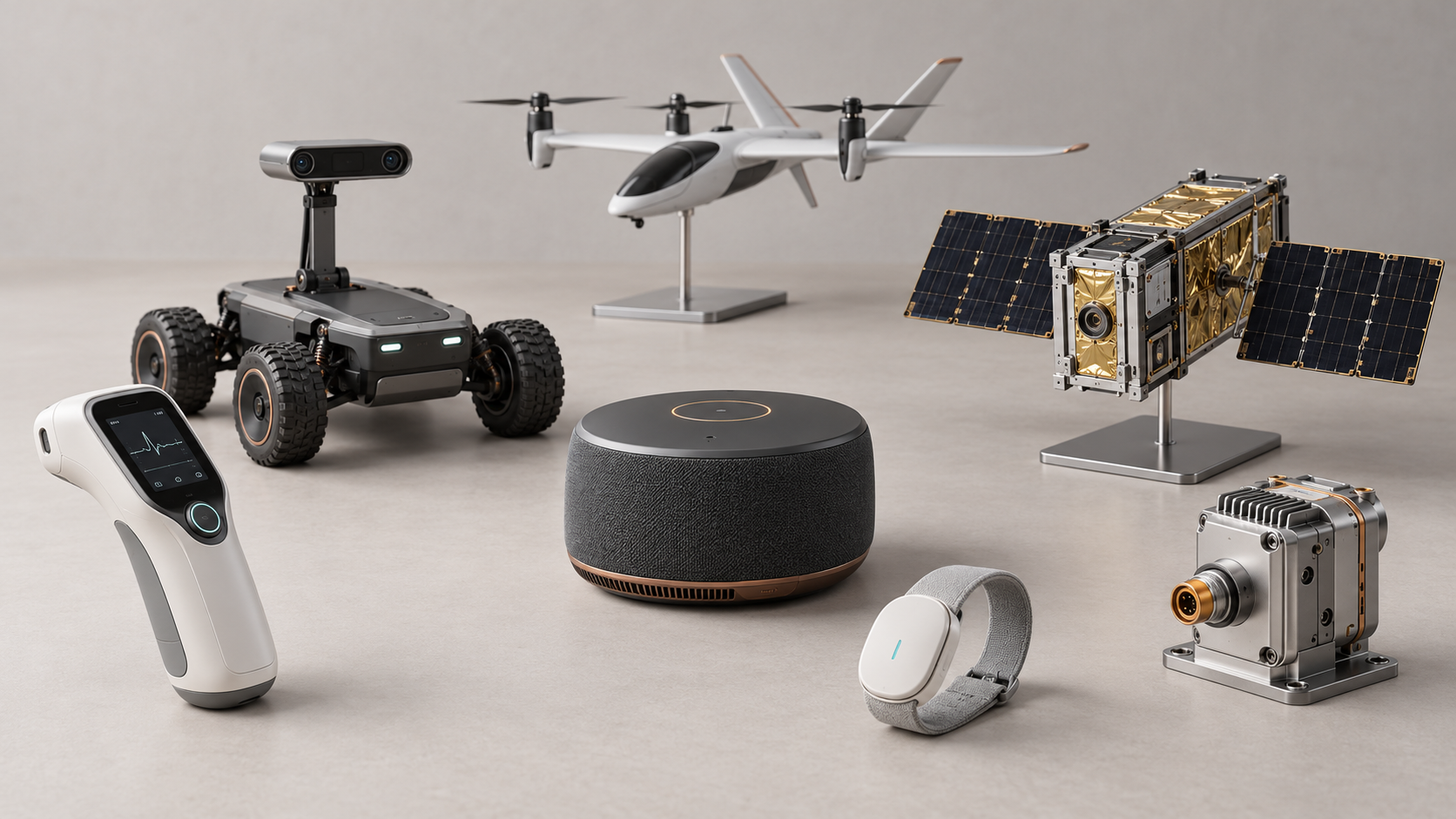
Structure. Sensing.
Signal. Software.
The enclosure, electronics, firmware, and user experience share one set of requirements.
Consumer electronics, medical devices, industrial instruments, robotics, drones, and microsatellites demand different kinds of engineering. We define the operating conditions, critical interfaces, and verification work before committing to a development architecture.
A product program brings those disciplines into a shared roadmap, with named responsibility for interfaces, reviewable design files, and evidence at each development gate.
A requirement has a target, a verification method, and a record of the result. The thresholds and test conditions are defined for the actual product.
| Requirement | Acceptance definition | Verification approach | Evidence produced |
|---|---|---|---|
| Battery operating time | Runtime target and duty cycle agreed in the product brief | Measure current across operating modes; confirm with a runtime test | Power profile, calculation, and recorded test result |
| Recovery after connection loss | Fallback behavior and recovery conditions defined in the interface specification | Exercise disconnect, reconnect, restart, and failure cases | Test cases, device logs, and resolved defect records |
| Production test coverage | Critical functions testable before dispatch | Review fixture access and test coverage during pilot builds | Test procedure, coverage review, and pilot-build findings |
Example structure only. These are verification-planning examples, not completed tests or product performance claims.
A defined scope. Inspectable outputs.
A decision at every review.
The program is built around the product’s maturity, technical risks, commercial targets, and evidence requirements. Each workstream has an agreed owner, deliverables, and acceptance criteria. The first two scopes are open below; expand the remaining scopes for their outputs and review decisions.
Translate the product brief into measurable requirements. Allocate functions across mechanical, electronic, embedded, and software subsystems. Resolve architecture choices through focused experiments and explicit performance, power, cost, and risk budgets.
Develop the physical product around use, assembly, manufacturing, and service. Explore form and interaction alongside mechanisms, materials, tolerances, structural behavior, thermal paths, and environmental protection.
Define circuit architecture and component choices against signal quality, power, size, availability, and cost. Develop schematics and PCB layouts, integrate sensing and communications, and use board bring-up to characterize actual behavior.
Develop firmware, device drivers, control logic, and communication interfaces around the hardware architecture. Plan provisioning, update paths, failure recovery, and the application or service interfaces needed for the complete product.
Map user workflows and the physical and digital interactions that matter. Evaluate prototypes with representative users. For medical programs, establish intended use, risk responsibilities, and qualified quality and regulatory support within the agreed scope.
Trace requirements to test methods and results. Prepare reliability and environmental testing, resolve design-for-manufacture and design-for-test needs, and support pilot builds and transfer to the agreed manufacturing partner.
What has changed. What has been demonstrated. What remains open. What the next investment will resolve.
From everyday experiences to specialist systems.
The right disciplines for each challenge.
Wearables, audio, smart-home devices, companion apps, and useful everyday experiences.
Connected care, diagnostic concepts, laboratory tools, usability, and defined evidence pathways.
Instrumentation, automation, mobile platforms, controls, and the tools people use to operate them.
Drones, microsatellite concepts, floating stations, sensing, communications, and integrated platforms.
A closer look at system decisions, design artifacts, and the evidence needed to advance. These are digital design and planning studies, with their scope and verification status stated explicitly.
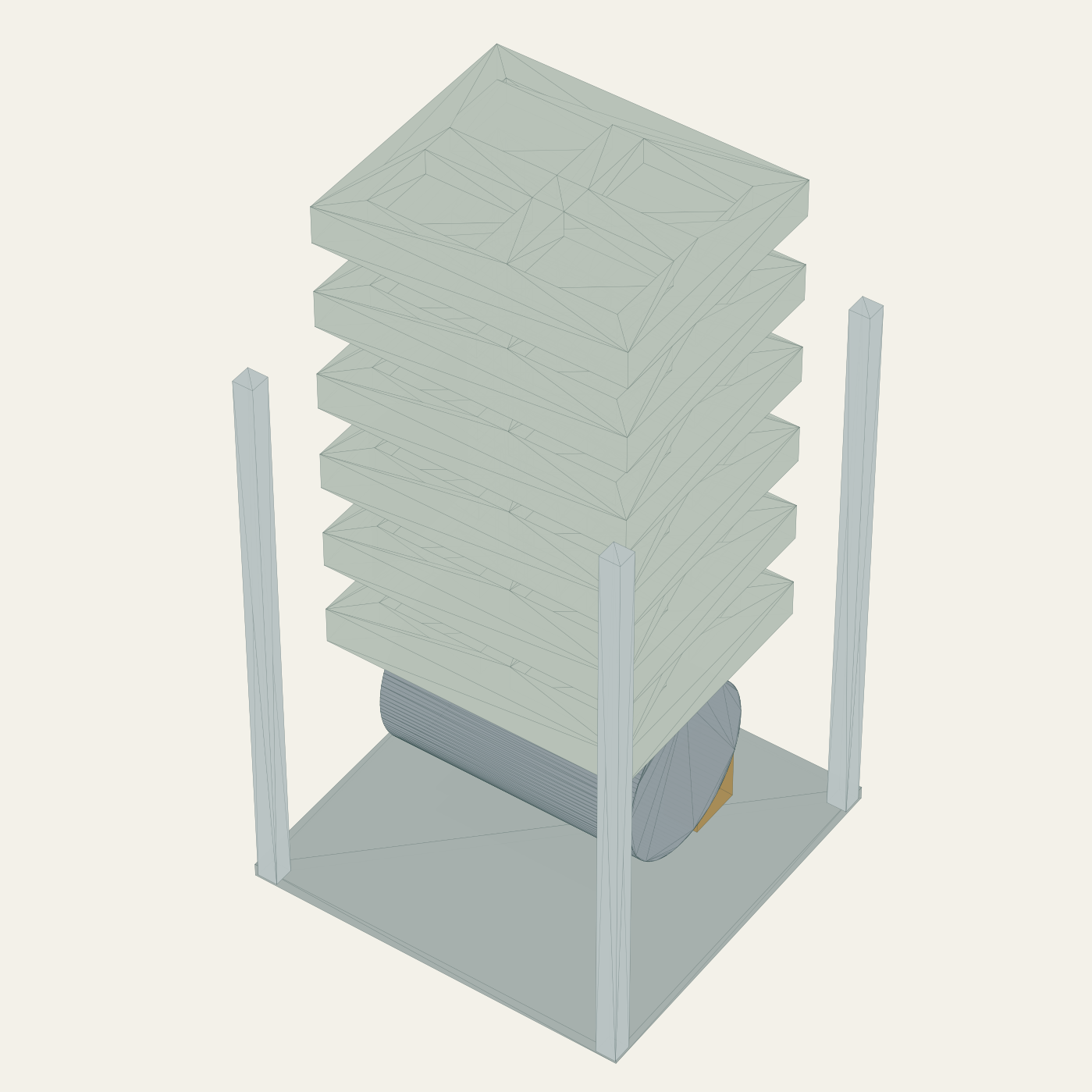
A contained biological experiment developed into an instrument architecture, editable CAD, and tested reference control logic.
Read the digital design study ↗CONNECTED DEVICES / BIOMETRICSA workplace-access concept with separate acquisition paths and a defined plan for security, usability, and privacy evaluation.
Read the pilot planning study ↗Set requirements, intended use, target economics, scope, and the highest-priority technical risks.
Gate / Agreed brief & feasibility planBuild focused experiments around the assumptions that could change the architecture.
Gate / Architecture supported by evidenceDevelop the physical and digital layers together; test against defined requirements.
Gate / Requirements demonstrated in prototypesPlan validation, production transfer, maintenance, and software evolution.
Gate / Documented release & transfer decisionDefine who owns each subsystem, integration boundary, supplier relationship, and unresolved risk. Specialist partners are identified in the scope.
Track design revisions, decisions, requirements, and test evidence. Review changes against schedule, cost, performance, and downstream impact.
Consider tooling, component availability, test strategy, service access, software maintenance, and cost reduction while the design is evolving.
Agree source files, build instructions, drawings, BOMs, test records, IP terms, and support responsibilities before the handoff. Volume production sits with the selected manufacturer.
An initial conversation about feasibility, scope, and the next stage of development.
Tell us what you’re working on, where the project stands, and what you need help with. We’ll review your inquiry and get in touch to discuss a practical next step.
Your product and intended users
Technical feasibility and development risks
Scope, priorities, and a path forward